
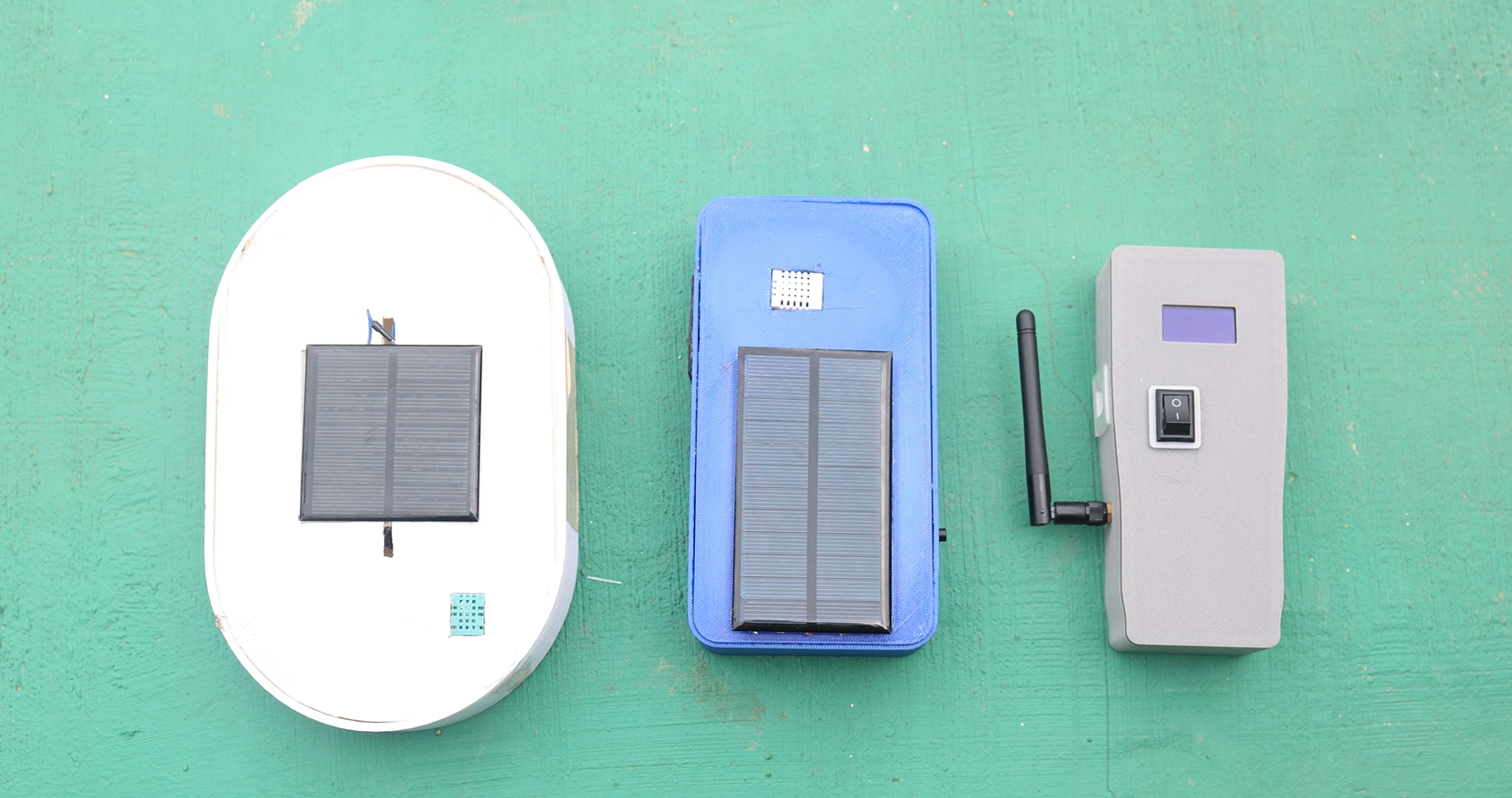
A group of Industrial Engineering students at the Kwame Nkrumah University of Science and Technology, Kumasi (KNUST) has developed a locally fabricated device that measures solar irradiation and ambient temperature, with readings accessible remotely on a smartphone.
The project, titled “Development of a Machine Learning-Based Smartphone-Monitored Solar Irradiation and Temperature Instrument,” was undertaken by BSc Industrial Engineering students in the Department of Mechanical Engineering under the supervision of Professor George Yaw Obeng.
The team comprises Peter Baidoo, Zadok Kofi Armah Ekuful, Susanne Dansoah Gyamfi, Philip Nti Quayson, Lawrencia Opoku and Daniel Vivor.
The instrument is designed to provide data on the amount of solar energy available and prevailing temperature conditions to support decisions on the effective use of solar energy.
“Energy is behind almost everything we do in our society, from industries to our homes, and so it is important that we know how to make the best of energy available to us,” a member of the team said.

According to the students, the device is the third generation of the project. The first version recorded data that could only be accessed on a computer, while the second displayed readings on a screen but required users to record the data manually.
The latest version enables users to access measurements remotely on their smartphones.
“Our refabrication design, which is the third generation, helps you to take those readings even when you are away from the device on your smartphone,” the student explained.
The team said local fabrication could also reduce costs and make the technology more accessible for use in Ghana.
“Because it’s locally produced, it is accessible, it is less costly, and it’s also very much easier to understand in our local setting,” the student said.
The project demonstrates how student-led engineering can improve existing prototypes and develop practical tools to support renewable energy research and utilisation.
Story: Emmanuel Kwasi Debrah


